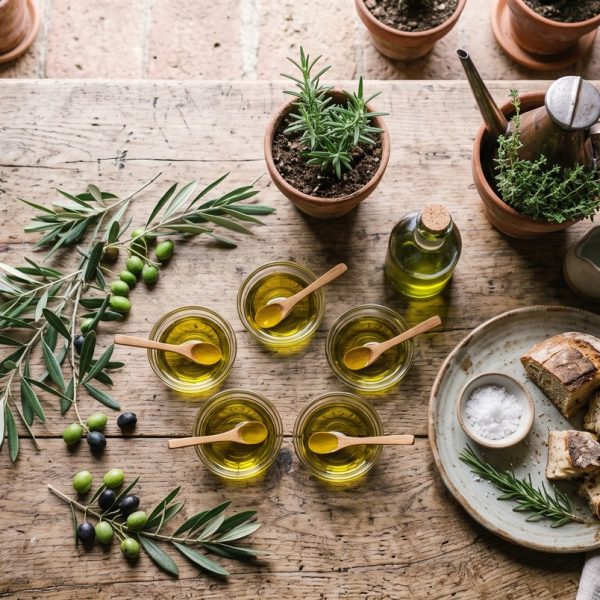
Most visitors to Chianti arrive thinking about wine and leave talking about the olive oil. An olive oil tasting here works nothing like the little dishes of oil and bread set out at an average restaurant. Done properly, on a working estate, it is closer to a wine tasting: you compare a handful of oils side by side, learn to spot the differences between them, and come away understanding why the bottle sitting in most supermarkets barely counts as the same product.
What Actually Happens During a Real Tasting
A guided olive oil tasting usually starts with the oil warmed slightly in a small glass, cupped in both hands so the aromas open up before the first sip. Tasters are asked to notice three things: fruitiness, bitterness and a peppery sensation at the back of the throat that can catch first-timers off guard. That pepperiness is not a flaw. It is a sign of high polyphenol content, which is one of the reasons fresh, well-made olive oil is treated as a health food rather than just a cooking fat.
Estates in the Sienese Chianti countryside typically pour three or four oils from the same harvest but different groves or pressing dates, so the differences are easy to taste side by side rather than guessed at from memory. Bringing a loaf of plain bread to cleanse the palate between pours, rather than skipping straight to the next oil, makes a noticeable difference in what you can actually pick up.
Why Chianti's Olive Oil Rarely Travels the Same Way the Wine Does
Chianti is famous for wine, but its olive oil deserves at least equal attention, partly because so little of it leaves the region compared to the wine. Many groves here are small, family-run and produce just enough for local restaurants and direct sales to visitors, which is part of why an olive oil tasting tuscany travelers book directly with an estate tends to feel more personal than a stop on a large group wine tour. You are usually talking with someone who pressed the oil themselves, not a hired guide reciting facts from a script.
The harvest itself, generally from mid-October through November depending on the year, shapes the whole calendar for an agriturismo chianti visitors choose for a stay. Guests who time a trip around it can sometimes watch the olives go from tree to press within a single day, since fresher pressing is one of the biggest factors separating a good oil from an exceptional one.
Building a Tasting Into a Longer Stay
An olive oil tasting works best as part of a slower few days rather than a single rushed stop between other sights. Pairing it with a short walk through the actual groves beforehand gives context that tasting alone cannot: seeing how the trees are pruned, how close together they grow, and how the soil changes from one grove to the next explains a lot about why neighboring producers can taste so different from each other.
Anyone building an itinerary around Tuscan agritourism might also look at how other working farms structure a stay. Rural stays built around agriturismo elsewhere in Italy follow a similar rhythm of farm work, food and a slower pace, even where the crop and the landscape look completely different from Chianti's hills.
What to Actually Buy Afterward
The single biggest mistake visitors make after a tasting is buying a bottle based on the label instead of the harvest date. A bottle marked with this year's or last year's harvest, stored away from light and heat, keeps its character far longer than one that has quietly sat on a shelf for two years, however attractive the packaging looks. Estates that host tastings will usually sell what they just poured, which is the safest way to make sure the bottle in your suitcase tastes like the one you fell for on the terrace. Home cooks who want to keep learning after the trip can find a genuinely useful, opinionated crowd on r/Cooking, where people compare harvest dates and pressing methods with the same seriousness wine drinkers apply to vintages.
It is also worth asking how the estate labels its oil for visitors from other countries, since Tuscany's own linguistic history runs deeper than most people realize. The region's dialect actually shaped the wider language, a history covered well in this account of how the Tuscan dialect influenced standard Italian, and it is part of why so many food and wine terms visitors pick up here sound instantly familiar once they get home.
When to Go
Harvest season draws the most attention, but a tasting works at almost any time of year since good estates hold onto their best bottles carefully. Late spring and early autumn tend to offer the mildest weather for walking the groves beforehand, while a harvest-season visit adds the chance to watch the actual pressing, which is worth the cooler weather and shorter days for anyone genuinely curious about how the oil gets made.
Either way, the tasting itself rarely takes more than an hour, but it tends to change how a person shops for olive oil for years afterward.